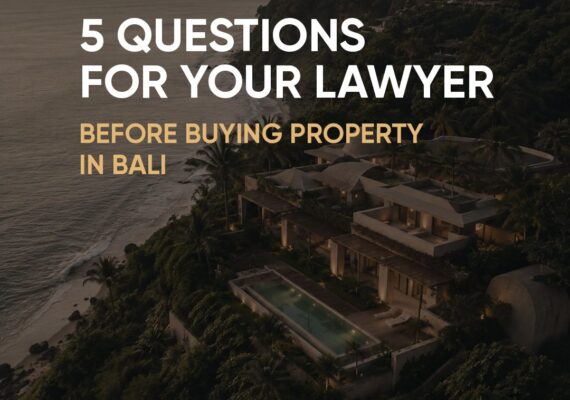

For about 60 years, Bali has transformed from a farming island with 2.1 million residents into a tourism economy with 4.3 million residents and nearly 7 million foreign tourists annually. This change did not happen by itself — it is the result of specific decisions: the airport, a master plan commissioned by the state and the gradual tightening of ownership and land rules.

Starting point
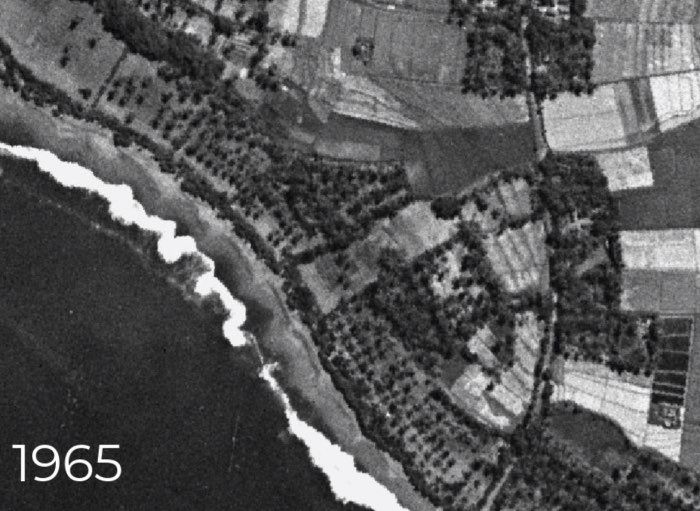
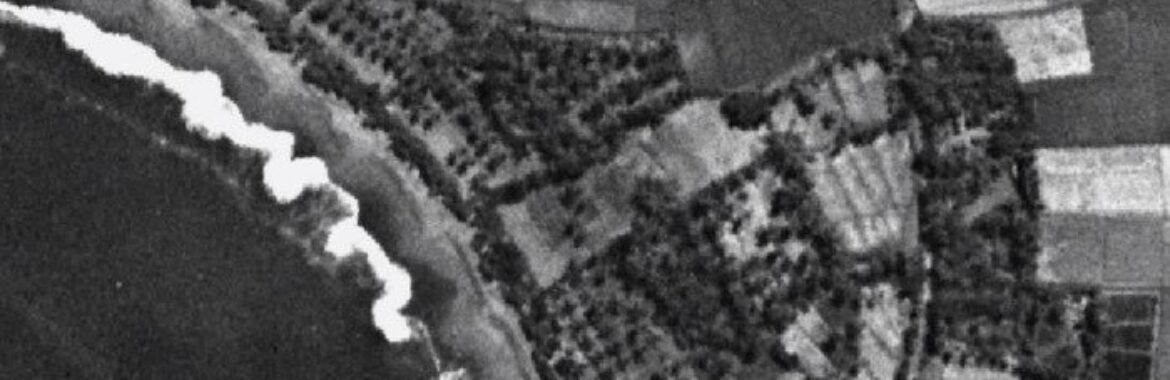
In 1960, Indonesia adopted the Basic Agrarian Law (UUPA No. 5), which preserved freehold ownership of land (Hak Milik) for Indonesian citizens — a rule that determined who has access to the market and continues to this day. In the 1960s, Bali was primarily a farming island: the population in 1971 was 2,120,091 people, and the economy relied on rice and fishing in the 1960s. In 1963, the first large international-class hotel was opened in Sanur — the Bali Beach Hotel, built on a state initiative. It was around it that the tourist flow began.
The airport and the opening to the world
Bali's airport started as a small airstrip from the Dutch colonial era in the early 1930s (in Tuban, now Denpasar). It received international status in the '60s, and a new international terminal was opened in 1978. The current international terminal is from 2013. Without a direct connection to world air traffic, mass tourism could not have started.
The master plan and Nusa Dua
In 1971, with the help of the UN, the state commissioned the French consultancy SCETO to conduct a comprehensive tourism development study. The plan was officially adopted in the early '70s. In 1972, a coordination structure was created, and in November 1973 — the state company BTDC, which was to build the Nusa Dua resort complex. In 1974, the World Bank granted a $16 million loan for the project. Nusa Dua was chosen because it is dry, sparsely populated land close to the airport and far from traditional villages — a decision that is cited today as an example of both planning and separating the tourist from local life. The first large hotel there opened around 1983.
The population and the cities
Tourism growth went hand in hand with population growth. According to BPS censuses:
| Census | Population |
|---|---|
| 1971 | 2 120 091 |
| 1980 | 2 469 724 |
| 1990 | 2 777 356 |
| 2000 | 3 146 999 |
| 2010 | 3 890 757 |
| 2020 | 4 317 404 |
The fastest decade is 2000–2010 with growth of over 2% annually — exactly the period when South Bali expanded most intensively. Today the density is about 800 people per square kilometer, and the province's economy is about 16.5 billion dollars (2022), with tourism contributing about 80% of it.
Tourism in numbers
Foreign arrivals in Bali (BPS data, Statistics Indonesia):
| Year | Foreign tourists |
|---|---|
| 1970 | 24 340 |
| 1980 | 139 695 |
| 1990 | 489 710 |
| 2000 | 1 412 839 |
| 2010 | ≈ 2,500,000 |
| 2019 | 6 275 210 |
| 2020 | ≈ 1,050,000 |
| 2025 | 6 948 754 |
The growth has not been uninterrupted. On October 12, 2002, the attack in Kuta killed 202 people and interrupted the rising line for years. In 2020, the pandemic collapsed arrivals by over 80%, and 2021 was practically zero. Recovery since 2024–2025.
The decade of Canggu
In the 2010s, the center of gravity shifted from Kuta and Seminyak to Canggu — an area that turned into a hub of digital nomads, cafes, and new villas. In 2017, Bali was declared by Tripadvisor as the world's best destination, and the same year an „overcrowded situation with traffic jam“ on a 6-kilometer road showed that infrastructure does not keep pace with growth. Since that period, the theme for local authorities has been not how to attract more tourists, but how to manage the ones who have already arrived.
The price of growth
Urbanization and construction have eaten up agricultural land. Various estimates point to a loss of rice fields in the order of 1,200–2,000 hectares annually, and the area of protected rice fields has fallen below 65,000 hectares compared to over 70,000 in 2019. In 2026, a provincial ordinance criminalizes the conversion of protected rice fields into buildings, with sanctions including demolition of the building.
Regulation today
Since the early 2020s, the state and the province have strengthened control over foreign activity. As early as 2023, a governor's circular letter No. 4 restricted tourists' access to properties with valid permits. In 2025, an interdepartmental working group was formed against illegal foreign business activity, and in areas like Binging there was demolition of illegal buildings. The message is clear: the island remains open for investment, but not for schemes outside the law.
This text describes the historical and regulatory framework as of the moment of publication and is not advice. Sources: BPS, World Bank, publications on tourism history.
If you want to understand how these changes shape today's market and what they mean for your specific investment — contact us.