

Bali is said to have no real low season — that the villas do not stand empty, but simply rotate their clientele. Half of this is true. The clientele does indeed rotate. But occupancy falls measurably — by nearly 1.5 times between peak and trough. If you plan to come, you need to know both.
The two seasons: the climate
Bali has a tropical climate with two seasons, not four.
- Dry season (April/May – October). The driest months are June – September. August is the driest month with around ten hours of sunshine per day; July is the sunniest. Humidity is lower.
- Rainy season (November – March/April). January is the wettest month — around 300–350 mm of rainfall and nearly twenty rainy days. February and March are also wet.
The temperature hardly changes throughout the year: usually 24 – 32 °C every month. The difference between the seasons is in the rainfall and humidity, not in the cold. The sea water stays warm year-round — around 26 – 29 °C.
How it actually rains
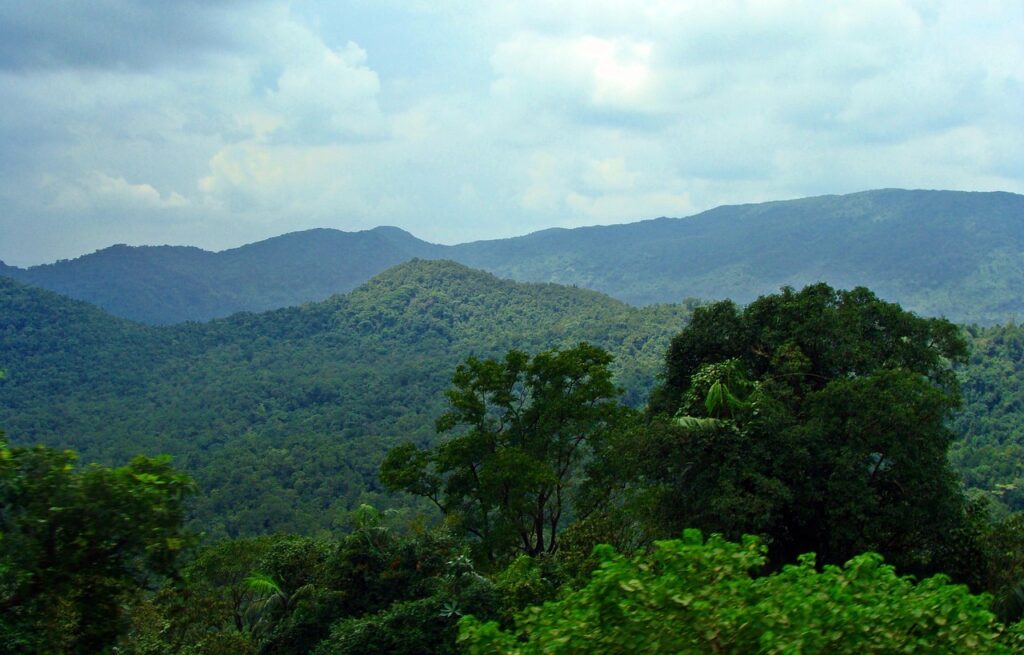
This is where the expectations of the European investor are most often disappointed by reality. The rainy season does not mean grey skies and non-stop rain. It usually rains briefly and heavily, in the afternoon — for an hour or two, after which the weather clears up. Mornings are often sunny. The interior of the island (Ubud and the mountains) receives more rainfall than the southern coast.
Therefore the rainy season is not a „closed“ season. It is quieter and wetter, but not dead.
Seasonality of occupancy: what the data shows
Here is where the popular myth meets the numbers. The official hotel occupancy statistics in Bali by month (star-rated hotels, 2025) look like this:
| Month | Occupancy |
|---|---|
| January | 60,3% |
| February | 51,6% |
| March | 46.6% (trough) |
| April | 57,2% |
| May | 58,1% |
| June | 64,7% |
| July | 67,8% |
| August | 69.5% (peak) |
| September | 68,2% |
| October | 64,6% |
| November | 58,0% |
| December | 60,9% |
The difference between the peak in August (69.5%) and the trough in March (46.6%) is nearly 1.5 times. That is, occupancy is not constant — it moves within a wide range. The same pattern repeats in 2024 as well, which means that this is a stable model, not a coincidence.
Note the role of Nyepi — the Day of Silence, which falls in March and shuts down the entire island for 24 hours. Part of the March trough is due precisely to it.
Why there are two peaks, not one
The real explanation of the „rotation of clientele“ is this: Bali has two peaks during the year, coming from two different groups of visitors.
- July – August — the dry high season. Australians come, for whom this is winter and school holidays, as well as surfers from around the world. July 2025 set a record with over 697,000 arrivals in a single month.
- Late December – early January — the holiday peak. Europeans, Russians and guests from Asia arrive, drawn by Christmas and the New Year holidays. December is among the wettest months, but despite this occupancy jumps.
Between these two peaks the island is sustained by digital nomads, expats and people seeking wellness, who stay year-round. This is the real meaning of „the clientele rotates“ — but it does not level out occupancy. The months February and March remain a genuine trough, while November and the beginning of December are a secondary decline before the holidays.
How it affects occupancy and prices
With holiday villas — the segment that interests the investor — the amplitude is greater than with hotels, because prices are more flexible.
- High season (July – August and December – January): occupancy around 85 – 95%, prices 1.3 – 1.5 times above base.
- Shoulder months (May – June, September, February): occupancy around 70 – 80%, prices close to base.
- Low season (March – April, October – November): occupancy 45 – 65%, prices 0.7 – 0.85 of base.
- The holiday weeks (Christmas and New Year): occupancy 95 – 100%, prices 1.8 – 2.2 times above base — and months in advance are booked.
The key consequence: annual averages hide seasonality. Four months of the year can operate at half capacity, and a large part of the annual revenue is decided in the two peaks. Therefore, when analyzing profitability, monthly data on occupancy and prices are more important than the annual average.
The practical conclusion
The thesis „Bali has no low season“ is half true — and the half that isn't true is exactly the one that affects money. The public changes, yes. But occupancy falls, prices fall, and the weak months must be planned for, not denied.
Therefore, when evaluating a property:
- Ask for occupancy by month, not an annual average.
- Check how the manager works with the low season — dynamic pricing, targeting long-term rentals at the bottom, events.
- Avoid assuming that the December peak is guaranteed — it depends on holiday demand, not on the climate.
Bali remains a market that requires understanding the seasons, not just the location. And if you want to see how a realistic annual profile looks for a specific property — peak, shoulder months and bottom — request an investment analysis. We will show you the numbers by month, not the average.