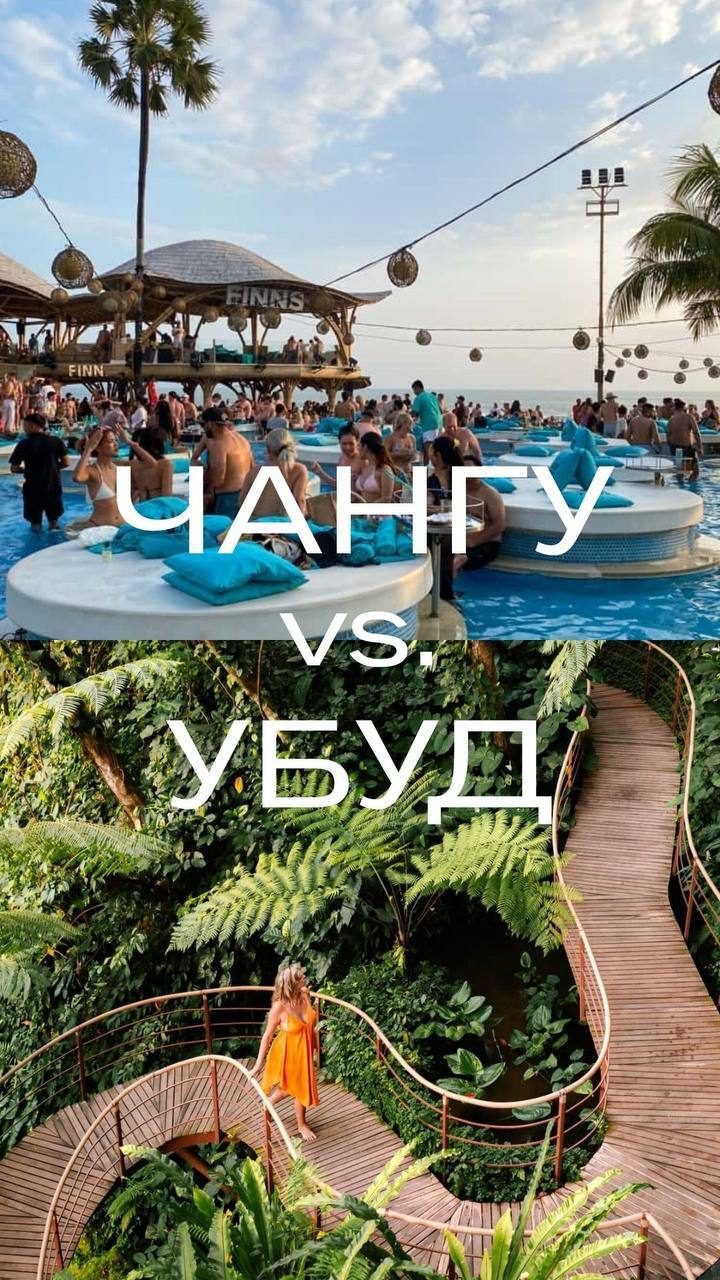


Canggu and Ubud are not two areas to choose between — they are two different products with different audiences and different yield logic. Canggu is a high-turnover, short-stay coastal zone; Ubud is an inland area with longer stays and a higher average check. The choice depends on what asset you want to manage, not on which is „better.“.

Canggu
What the area is
Canggu is Bali's most densely built villa zone and the center of surfing and digital nomads. It has sub-districts of different character: Berawa and Batu Bolong are central and expensive, Pererenan and Canggu are more western, quieter, and more affordable. Dozens of co-working spaces operate in the area, and traffic from long-term residents is constant.
Prices
Listings for 2025–2026 give an average price for a 2–3 bedroom villa with a pool of around USD 360,000 — exactly in the target segment. Sub-districts differ: a 3-bedroom leasehold villa in Berawa runs around USD 350,000 – 600,000, in Batu Bolong — USD 380,000 – 650,000, and in Pererenan — USD 260,000 – 430,000, i.e. 20–30% lower than the central parts. Over 85% of the offering is in leasehold format with 25–30-year contracts.
Yield and occupancy
Villa managers in Canggu report occupancy on the order of 70–80% annually, with peaks during the dry season. Gross yield is estimated in the range of 10–18% depending on the source, and net — around 8–12% after expenses. The discrepancy between sources is large precisely because methodologies and samples diverge; treat every single figure as a guideline, not a guarantee.
Who it's for
For investors who want fast turnover and high occupancy, are ready to compete with many other villas, and prefer shorter stays (usually 3–6 nights) with higher turnover frequency.
Ubud
What the area is
Ubud is the inland: culture, yoga, wellness, and nature. The audience here stays longer and seeks a unique product — a villa among rice terraces with signature architecture, not an ordinary pool by the beach. This is also one of the strongest destinations for both foreign and domestic tourists.
Prices
Average asking prices are lower than on the coast: a one-bedroom villa in listings from 2025–2026 starts at around USD 85,000, a 2-bedroom is in the range of USD 105,000 – 260,000, and a 3-bedroom — USD 270,000 – 415,000. Land value is several times lower than on the coast. A typical investment property here is in the range of USD 250,000 – 500,000.
Yield and occupancy
Occupancy is more stable throughout the year, but overall lower than on the coast. Gross yield is estimated at 10–15%, and net after expenses — at 5–10%. The lower entry price compensates for the lower percentage yield, so the difference in absolute income between Canggu and Ubud is smaller than the numbers suggest.
Who it's for
For investors oriented toward design and concept, toward longer stays (usually 5–10 nights) and lower turnover, as well as for those who themselves want to live part of the year surrounded by nature.
Brief comparison
| Canggu | Ubud | |
|---|---|---|
| Profile | surf, nomads, coast | wellness, culture, nature |
| Ownership type | mostly leasehold 25–30 yrs. | leasehold and freehold plots |
| Average villa price (listings 2025–26) | around USD 360,000 | USD 250,000 – 500,000 |
| Typical stay | 3–6 nights | 5–10 nights |
| Gross yield | 10–18% | 10–15% |
| Net yield | around 8–12% | around 5–10% |
| Who it's for | turnover and occupancy | unique product, balance |
Note that the yield ranking depends on the source: some analyses put Canggu clearly ahead, others give Ubud close gross figures thanks to the lower entry point. That's why the decision is rarely a clear numerical one and is often a question of strategy.
Practical details
- Access: Canggu is 12–17 km from Ngurah Rai Airport and usually 30–60 minutes by car. Ubud is 35–38 km away and 60–110 minutes — regularly around 90 minutes. The difference in access is noticeable for guests and affects demand.
- Length of stay on the island: the average length of stay for a foreign tourist in Bali in 2025 is 11.9 nights versus 12.98 in 2024 (BPS Bali). That is, tourists are coming in record numbers (6.95 million in 2025, +9.71%), but they are staying slightly shorter.
- Residence, not ownership: if you plan to spend time at the property, you need a visa, not ownership. The current instrument for remote work is the E33G Remote Worker KITAS — one-year, requires income of around USD 60,000 per year and a deposit of USD 2,000; applications are submitted online through the official visa portal of the immigration authorities. The B211A tourist visa has been replaced by type C1. Merely owning property does not grant the right of residence.
Conclusion
If your strategy is high turnover and short-term yield — Canggu. If you're looking for a lower entry point, longer stays and a product with character — Ubud. Many Bali portfolios combine the two precisely because they balance each other. Invest where your specific format is truly in demand, not where it's trendy.
Review in the area, the villas и investment projects, and for a selection to match your budget and strategy — request an investment analysis.
The price and yield figures are indicative market estimates for the 2025–2026 period from various sources and do not constitute a guarantee of future results. Every project is verified by documents.