
Bali isn't interesting on its own as a destination — it's interesting as an asset. While tourists ask „where to stay“, the investor asks „how much is left after expenses and what happens to my money in ten years“. This article looks at the island from the investment side: returns, supply and regulation — without brochures and without promises.
The real return
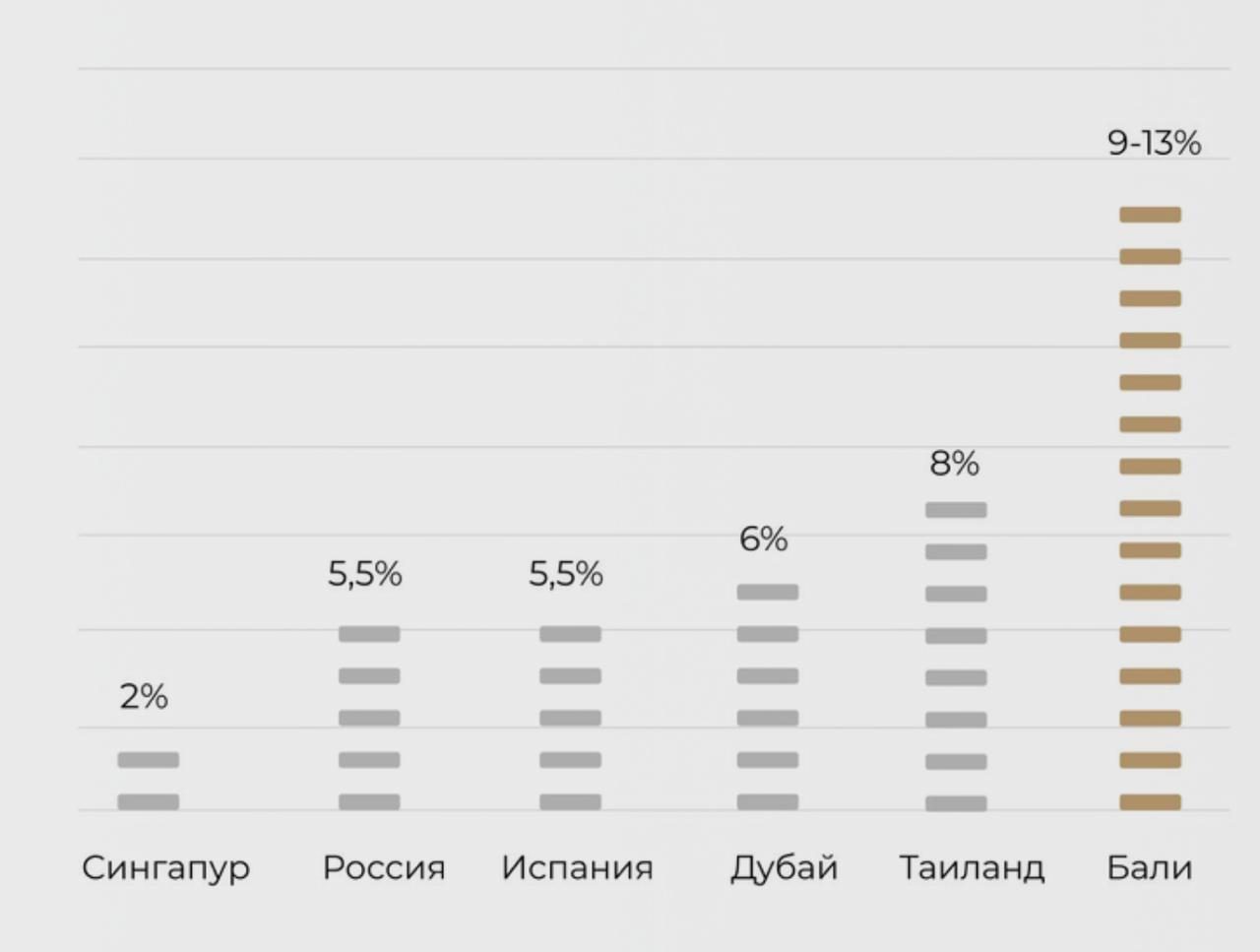
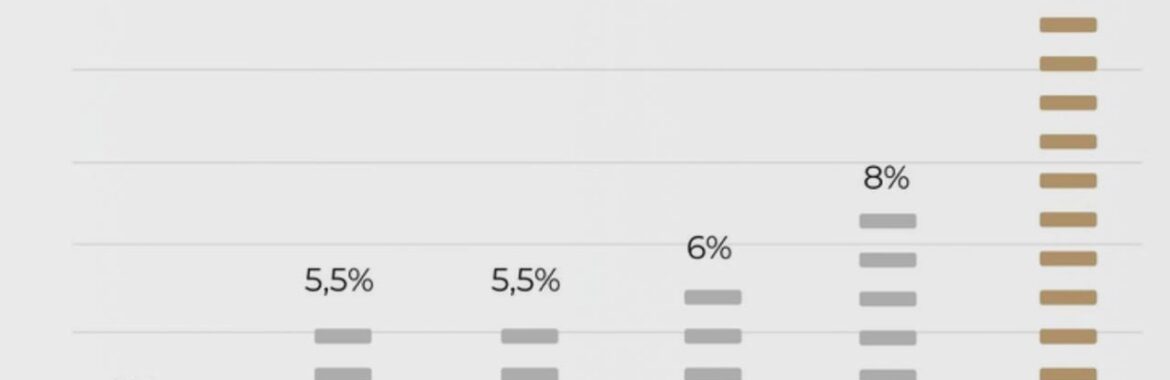
Returns in Bali are most often measured as rental yield, not as dividends. With professional management, the realistic net yield is between 8% and 12% annually. Gross yield in the sought-after areas reaches 12–18%, but that is a number before expenses, and expenses are not small: operating costs eat between 35% and 50% of gross income — platform commissions (15–20%), property management (20–32%), maintenance, utilities and insurance, as well as tax withheld at source (around 10% for non-residents). Therefore, on a 12% gross calculation, the owner often sees 7–8% net.
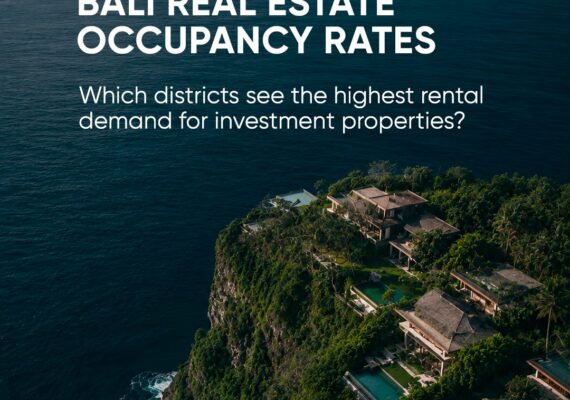
Occupancy is the other half of the equation. The average occupancy on the island is around 65%, in strong locations — 70–85%. If occupancy falls below expectations, the yield falls with it.
Why yields are higher than in developed markets
The reason is not magic, but market structure. Bali operates mainly on short-term rentals, not long-term contracts, and feeds on a constant tourist flow — in 2025 the island recorded a record of nearly 6.95 million foreign arrivals. The higher yield is compensation for the higher risk and the more active management that the property requires.
We deliberately do not give comparative figures for other countries. A correct comparison requires the same methodology — gross versus net, property type, location, tax regime — and published „average yields“ by country are rarely comparable. It is more useful to compare a specific property in Bali with a specific property elsewhere, using the same formula.
Supply is growing
High yields attract capital, and capital builds. In Canggu alone, by 2025 more than 1600 new apartments were added, and the supply of one-bedroom villas has grown by over 40% and of two-bedroom ones — by nearly 60% in two years. In saturated locations this is already pressuring rents and occupancy. The investment takeaway is simple: avoid already saturated micro-locations and look for less built-up zones with proven demand.
Regulation defines the structure
A foreigner cannot own freehold land (Hak Milik) — it is reserved for Indonesian citizens. In practice there are three legal routes: long-term lease (Hak Sewa, usually 25–30 years with extension options), Hak Pakai (right of use, requires a residence permit) and HGB, held by a PT PMA company. For a portfolio and active renting, PT PMA is the needed structure — it issues invoices, hires staff and pays corporate tax. The minimum paid-in capital for a PT PMA was reduced to 2.5 billion rupiah.
Nominee schemes (an Indonesian holding the title „on your behalf“) are void by law and already carry criminal liability. They are not the „cheaper option“ — they are the risk.
Entry and exit
The real acquisition budget is the price plus about 6% in transaction costs: BPHTB transfer tax (usually the buyer), notary fees, and for new properties — also VAT. On sale, the seller owes 2.5% transfer tax. An important detail with PT PMA: you sell the company's shares, not the title, and thus avoid a second BPHTB.
What to check
- the authenticity of the certificate at the National Land Agency (BPN), not a copy;
- the chain of ownership and the encumbrances on the title;
- the zoning of the land — protected agricultural and green zones are not converted;
- the building permits (PBG) and the certificate of fitness (SLF);
- whether the legal structure allows lawful renting of the property.
This text describes the general framework as of the date of publication and is not legal or investment advice. Regulations and market figures change. Before committing funds, the structure should be checked with a licensed Indonesian notary (PPAT) or lawyer.
If you want a net yield calculation for a specific property and a check of the legal structure — request an investment analysis.